I had a lovely time in Columbus, Ohio yesterday (August 27, 2026), doing a keynote for the Ohio Manufacturers' Association annual energy conference. The talk was titled "Electricity Demand Growth and Data Centers: A Guide for the Perplexed", and it drew on my work in the past few years about electricity used by data centers and how to incorporate them into load forecasts.
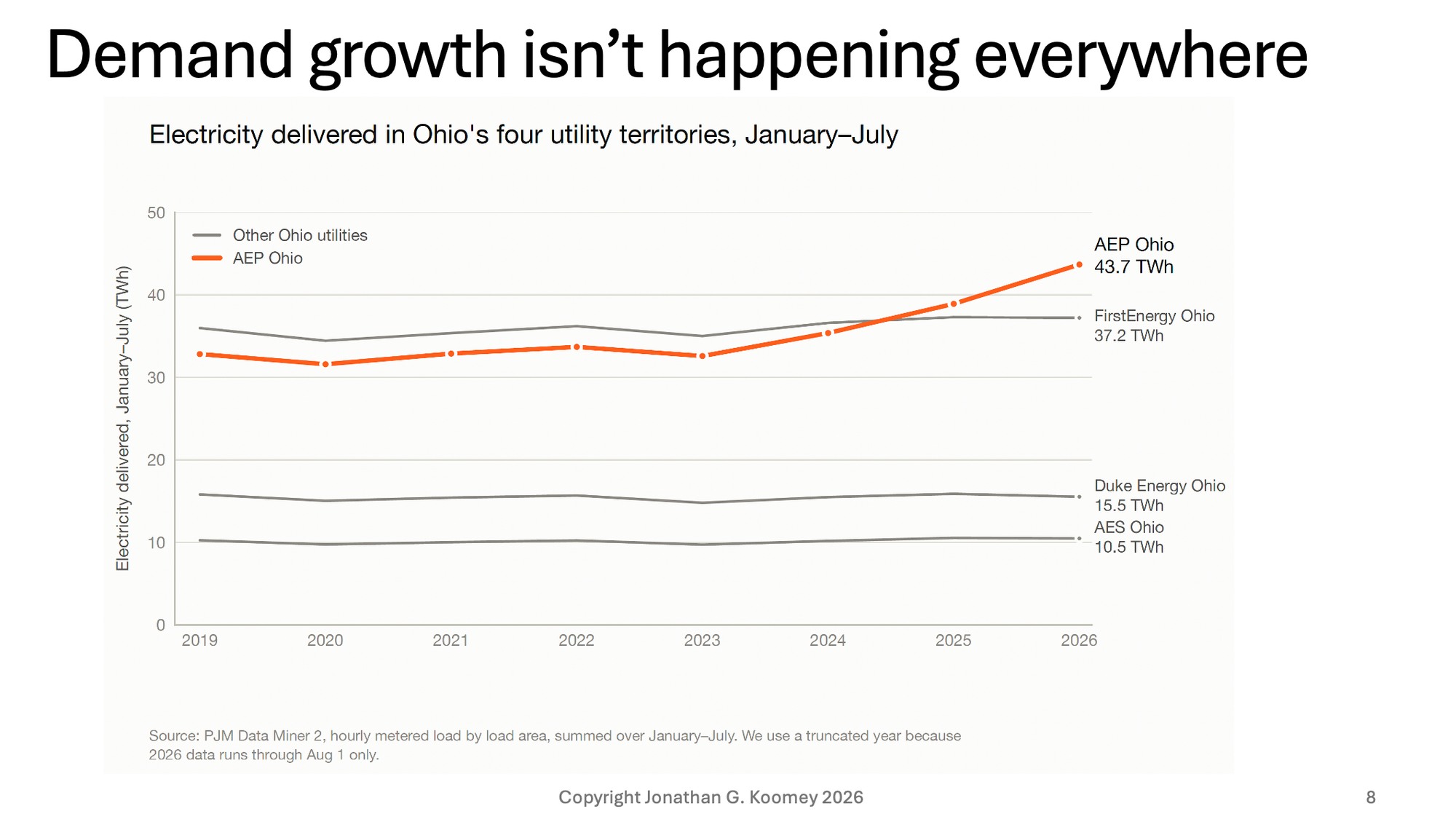
Here's one of the key slides, showing demand for four major utility areas in Ohio, showing that only AEP Ohio is seeing significant growth in recent years:
Electricity demand growth for four Ohio utilities, 2019 to 2026 (Jan-July only)
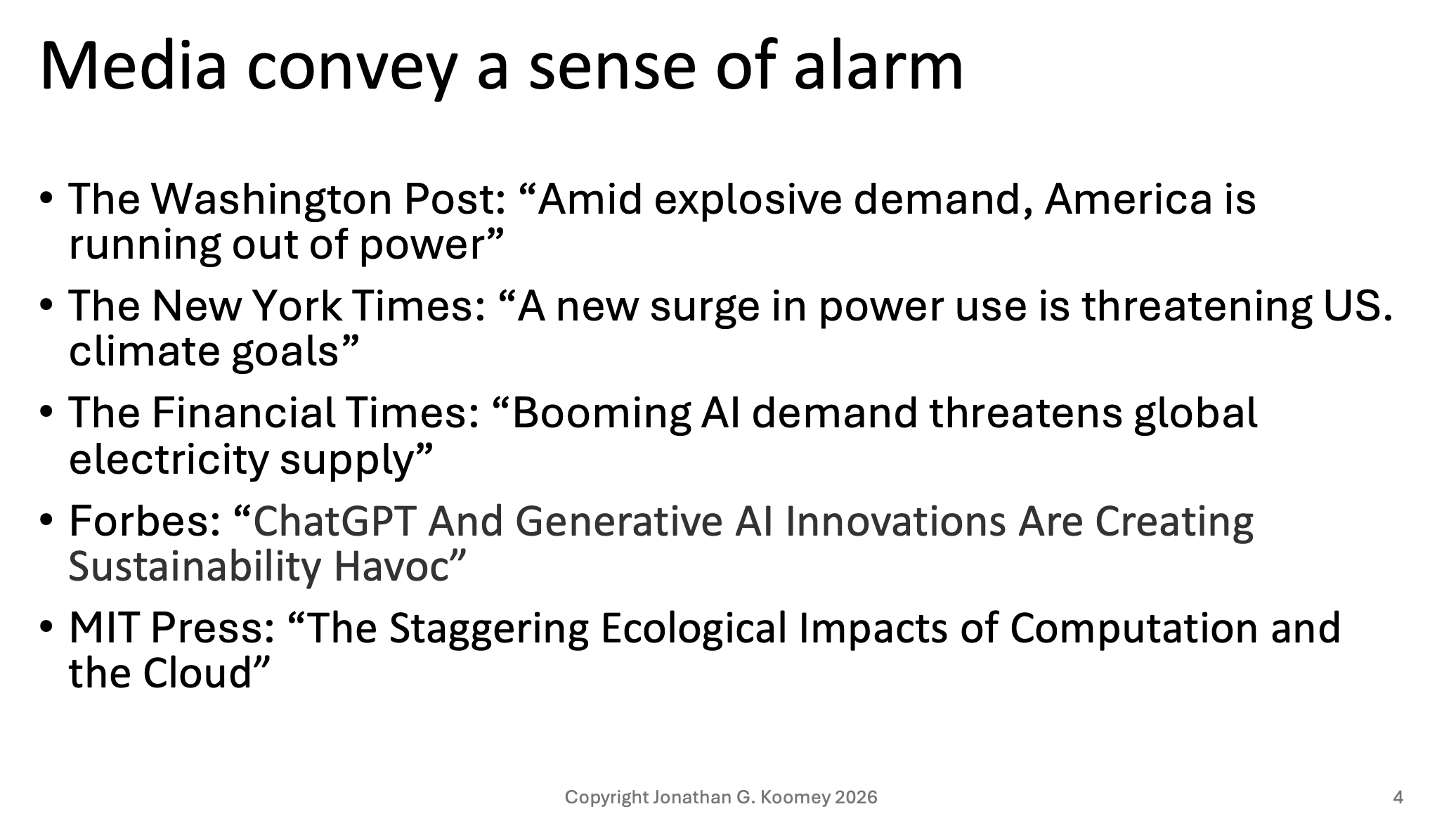
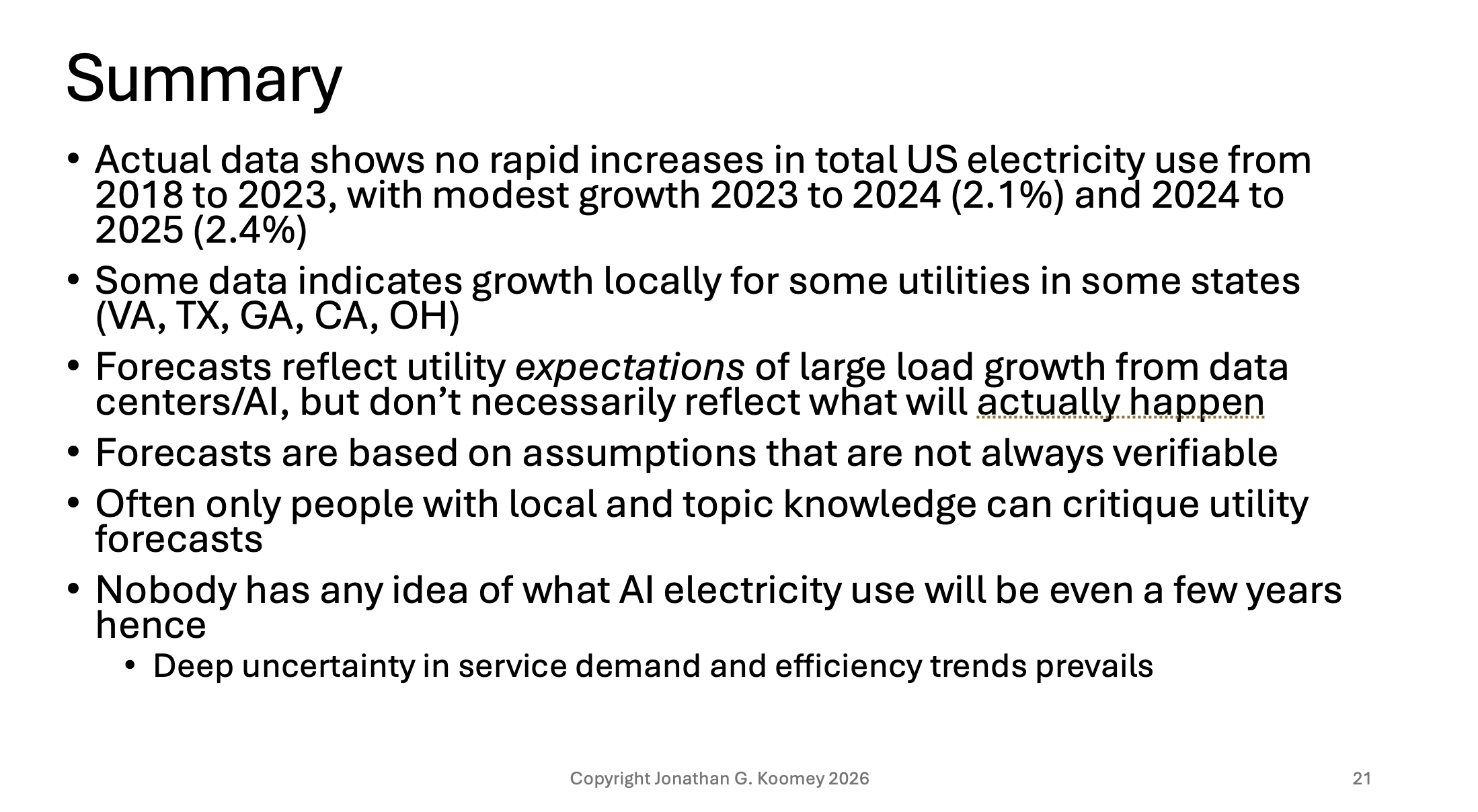
This mirrors what's happening in the US nationally, where some states (VA, TX, GA, CA, OH) are seeing demand growth in some places, but in many states there isn't any demand growth at all. The idea that explosive demand growth is happening everywhere is just not true, it's a local phenomenon, one fanned by media attention:
Media quotes indicating explosive demand growth caused by data centers
The IPCC mitigation report relies heavily on outputs from integrated assessment models (IAMs), which use different assumptions for drivers of emissions, such as GDP, population growth, and technology availability and costs. Unfortunately, modeling exercises rely on so many inputs and produce so many outputs that fully assessing results is slow and difficult.
The main resource for systematizing outputs of these models is the PYAM project, supported by the International Institute for Applied Systems Analysis (IIASA). PYAM provides tools that aid the visualization and analysis of any IAM outputs that follow the standard data format developed by the Integrated Assessment Modeling Consortium(IAMC).
The updated software tools described here are fully compatible with PYAM and IAMC data formats and have undergone testing for integration into the PYAM framework, though they have not yet been incorporated into that software.
Methods
Many analysts most commonly rely on the four-factor Kaya identity [1] for analyzing and comparing scenario results from IAMs. This tool is often used to decompose drivers of GHG emissions in the energy sector. The Kaya identity enables deeper understanding of the energy-sector outputs from IAMs by plotting key drivers affecting energy use and carbon dioxide (CO2) emissions in long-term greenhouse gas emissions scenarios.
We show the four-factor version of the Kaya identity in Equation 1:
Four factor Kaya identity, showing how energy-sector CO2 emissions relate to population, annual income (gross world product) per person, primary energy use per dollar and carbon intensity of primary energy, respectively.
As many researchers have realized, the original Kaya identity masks complex system dynamics in energy scenarios. In 2019, a more comprehensive version of the Kaya identity appeared in the journal Environmental Modeling and Software that incorporated an energy supply loss factor, the carbon intensity of fossil fuel supplied and the net emissions from the energy sector after sequestration [2]. In its fully developed form shown in Equation 2, the expanded version becomes:
Expanded Kaya identity, showing how energy-sector CO2 emissions relate to population, annual income (gross world product) per person, final energy use per dollar, energy supply loss factor, the fraction of primary energy supplied by fossil fuels (FF), the carbon intensity (total fossil carbon or TFC) of fossil fuels supplied and the net fossil CO2 emissions from the energy sector after fossil energy sector sequestration, respectively.
Of course, the energy sector is not the only important source of GHG emissions. We created another equation to summarize emissions for all sectors, adding land use, industrial process CO2 emissions, biomass carbon capture and storage (CCS), other forms of carbon capture (direct air capture in most scenarios, and emissions of other gases than CO2 (i.e., methane, nitrous oxide and F-gases). Carbon capture for fossil fuels is embedded in the CFossil fuels term
This fully expanded, all-sector decomposition tool, which characterizes total CO2 equivalent GHG emissions (in carbon equivalent emissions or CO2e), is summarized in Equation 3:
Additive terms in the fully expanded decomposition, which together sum to total global greenhouse gas equivalent emissions in any year. C for fossil fuels in the energy sector comes from Equation 2. Equation 3 adds CO2 from industrial processes, CO2 from land use and CO2 equivalent from non-CO2 gases. The final two negative terms represent carbon sequestration from biomass combustion and other forms of carbon sequestration like direct air capture (DAC), respectively. Carbon capture for fossil fuels is embedded in the CFossil fuels term.
Biomass carbon sequestration interacts with both the energy sector and the land-use sector, so we split that form of carbon capture from direct air capture to make sure any such interactions are correctly tracked.
We credit the foundation of these tools to Holmes Hummel’s 2006 dissertation [3], Interpreting Global Energy and Emission Scenarios: Methods for Understanding and Communicating Policy Insights. Hummel built the initial tools in Excel workbooks, which served well for years. However, it proved hard to convince modelers to integrate spreadsheets into their workflows, which were largely automated using Python and other more modern tools. With that experience in mind, we set out to recreate those tools as a Python package that modelers could easily upload and use.
We have now released that Python package for general use. Virtually all IAMs generate the required data to use our tools, and we stuck closely to the terminology, definitions and data structures embodied in IIASA's PYAM tools.
The Python package is licensed under Apache 2.0, which is an open-source license that allows free use, modification and distribution for commercial or private use. Any contributors automatically grant a royalty-free license to any patented algorithms they add to the software.
We are confident that these tools will facilitate analysis and comparison of IAM-based scenarios, assist in troubleshooting those scenarios and increase understanding of key drivers affecting GHG emissions
Example Dashboards of Decomposition Tools for Long-Term Emissions Scenarios
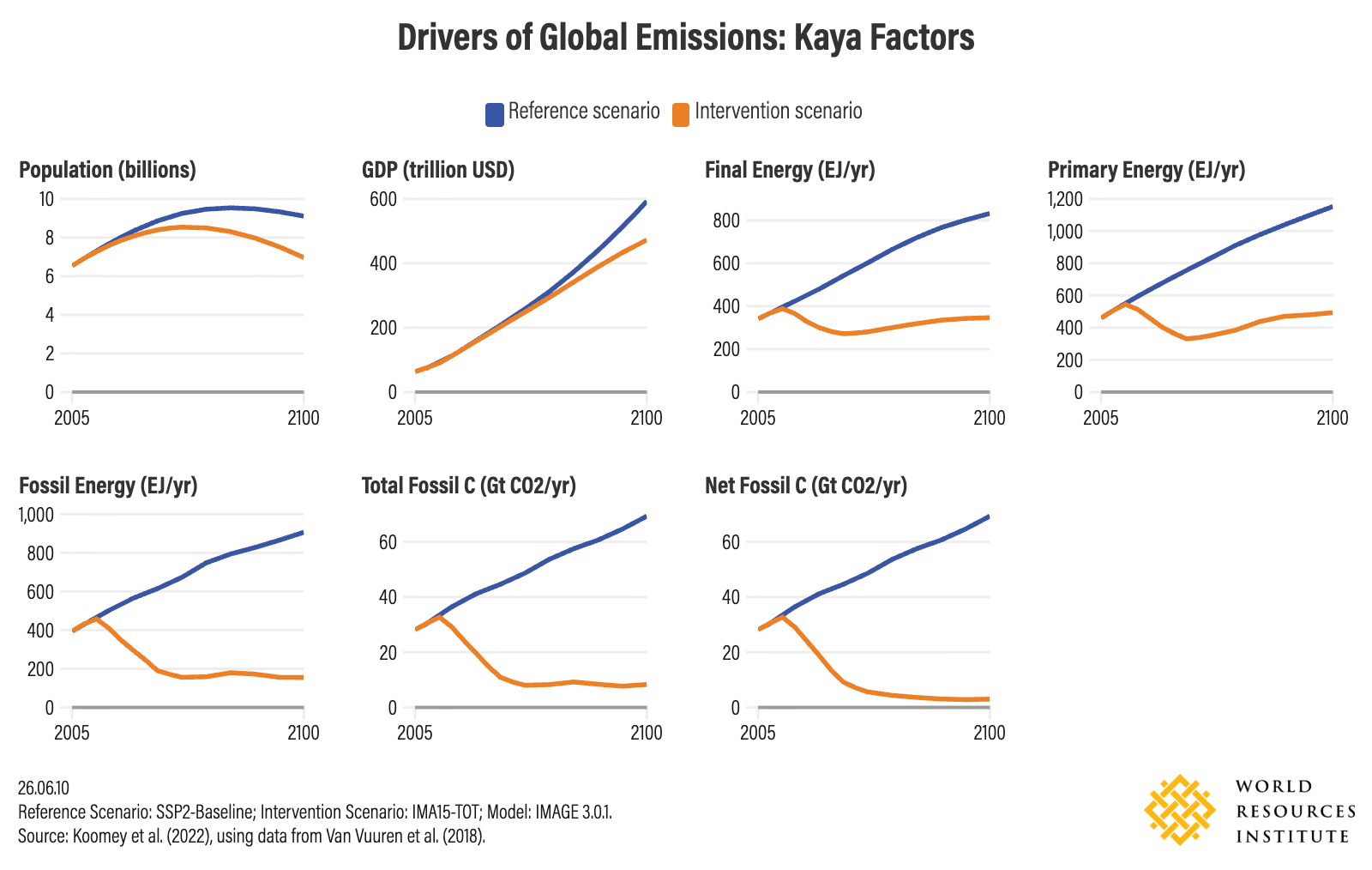
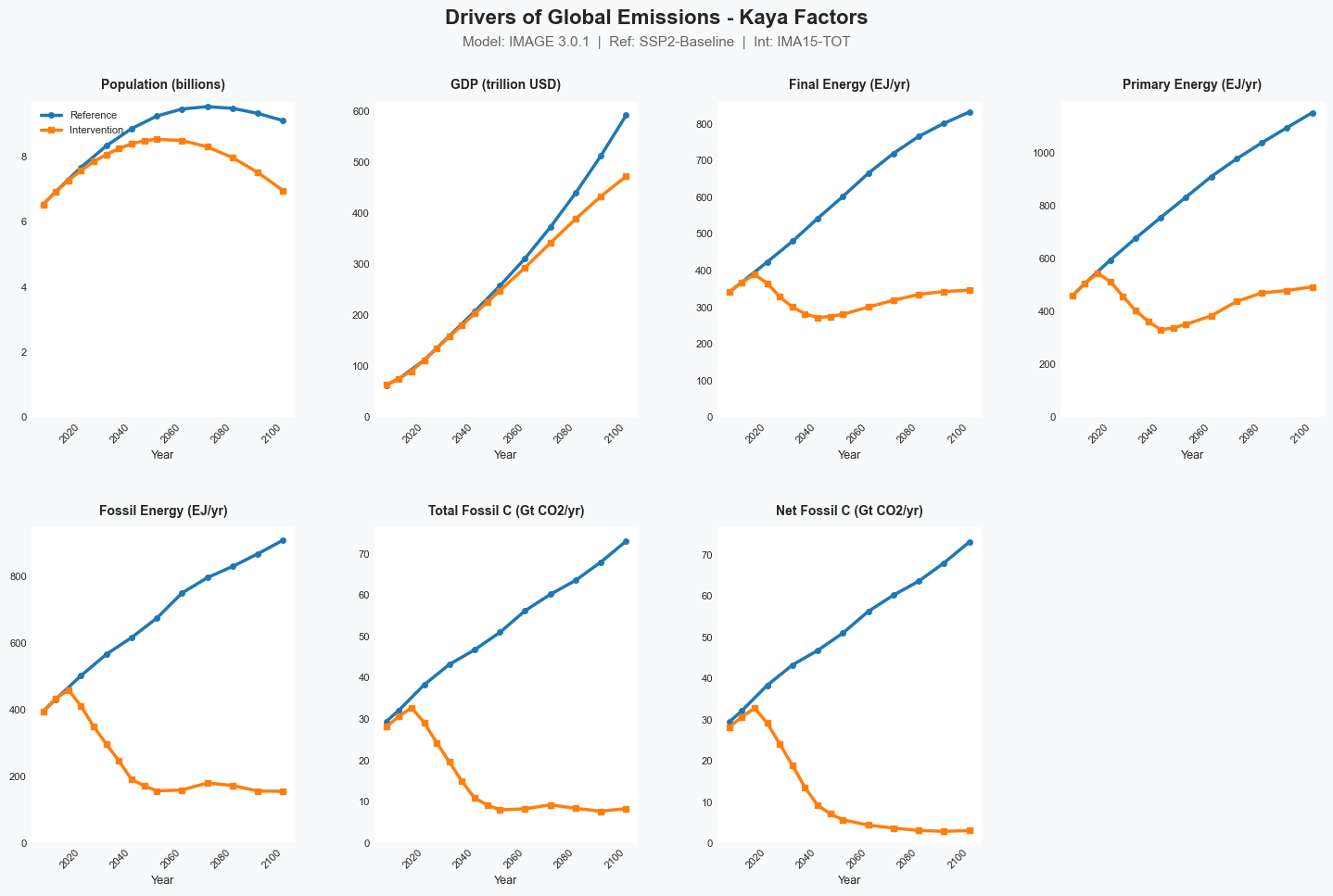
There are three main dashboards, as documented in the 2019 [4] and 2022 [2] Environmental Modeling and Softwarejournal articles. The first shows what we call "Kaya factors," like population, gross world product, final energy, primary energy, fossil fuel primary energy, total fossil carbon emissions and net fossil carbon emissions after accounting for sequestration. We use runs from IMAGE 3.0.1. The baseline is SSP2 and the intervention case is IMA15-TOT, a scenario that keeps global temperatures from exceeding 1.5 degrees C. The runs are documented in a 2018Nature Climate Changearticle [5].
Factors for creating the expanded Kaya identify to decompose energy-sector emissions into their component drivers
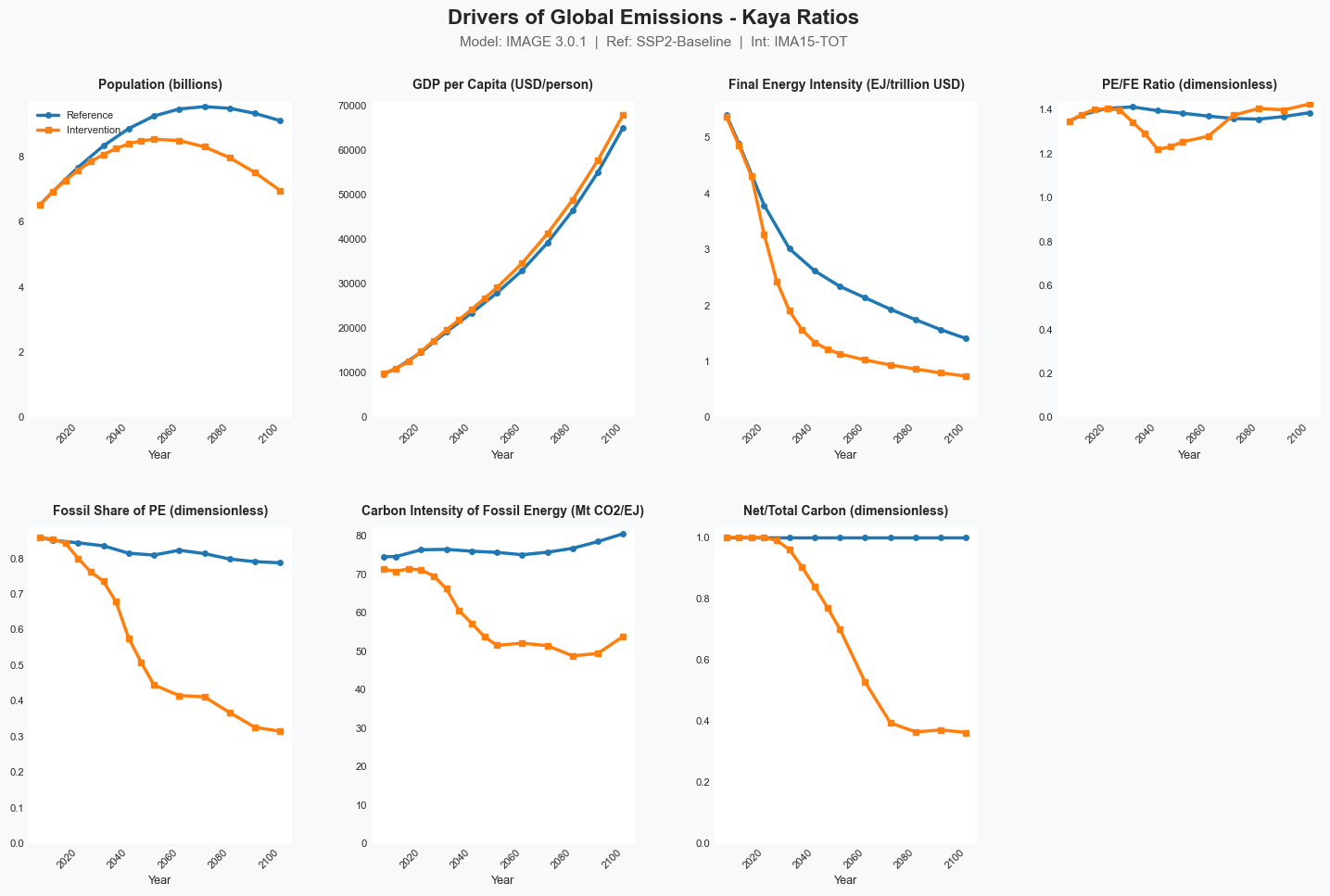
Blue lines are reference case values and orange lines are intervention case values.
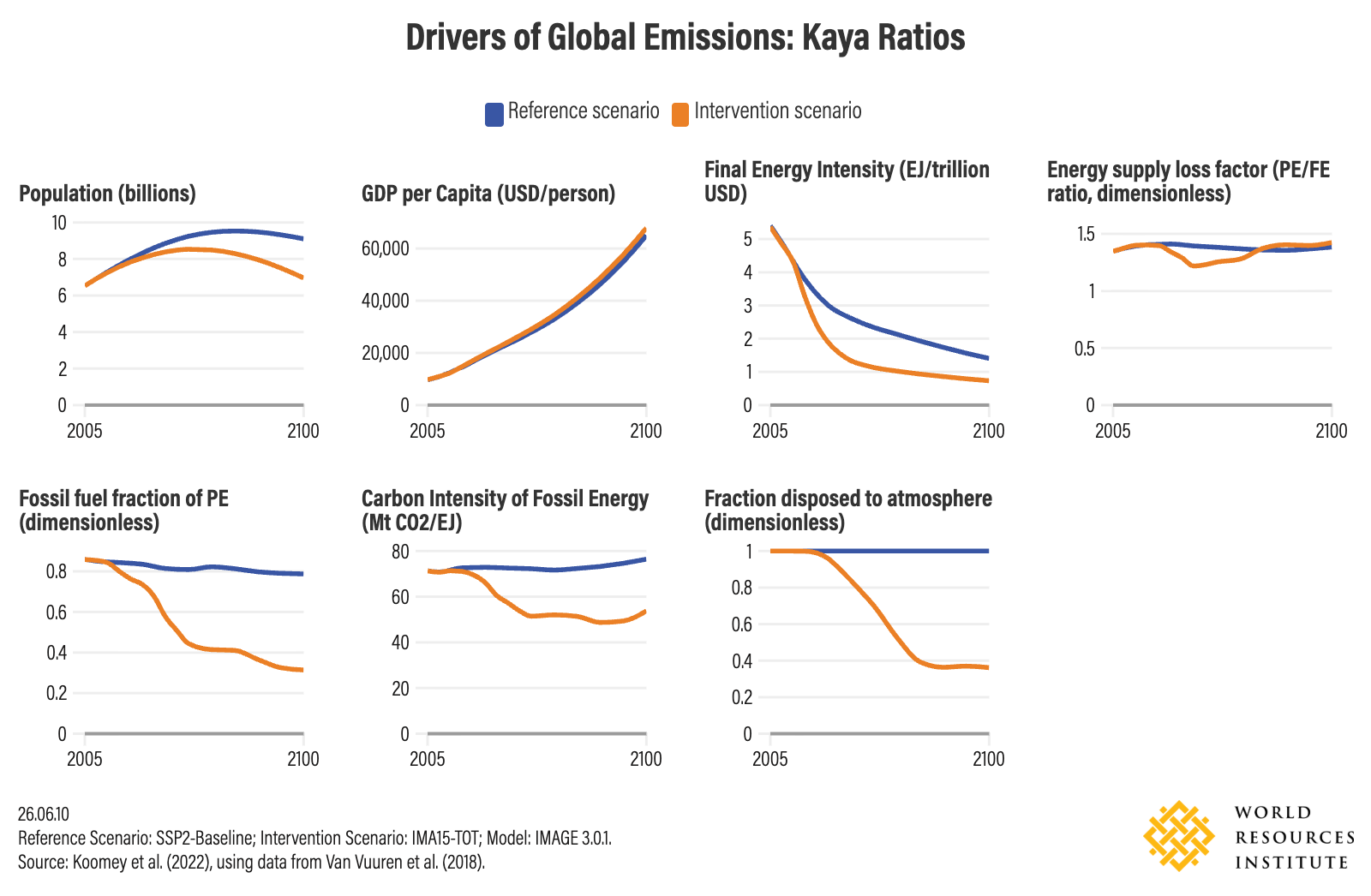
The second dashboard shows what we call the "Kaya ratios," which are the terms in the expanded Kaya identity. These include population, economic activity per person, final energy per dollar of economic activity, primary energy per unit of final energy, the fossil fuel fraction of primary energy, total fossil carbon per unit of primary energy and the ratio of fossil carbon reaching the atmosphere to the fossil carbon combusted in the energy system.
Ratios for the expanded Kaya identify needed to decompose energy-sector emissions into their component drivers
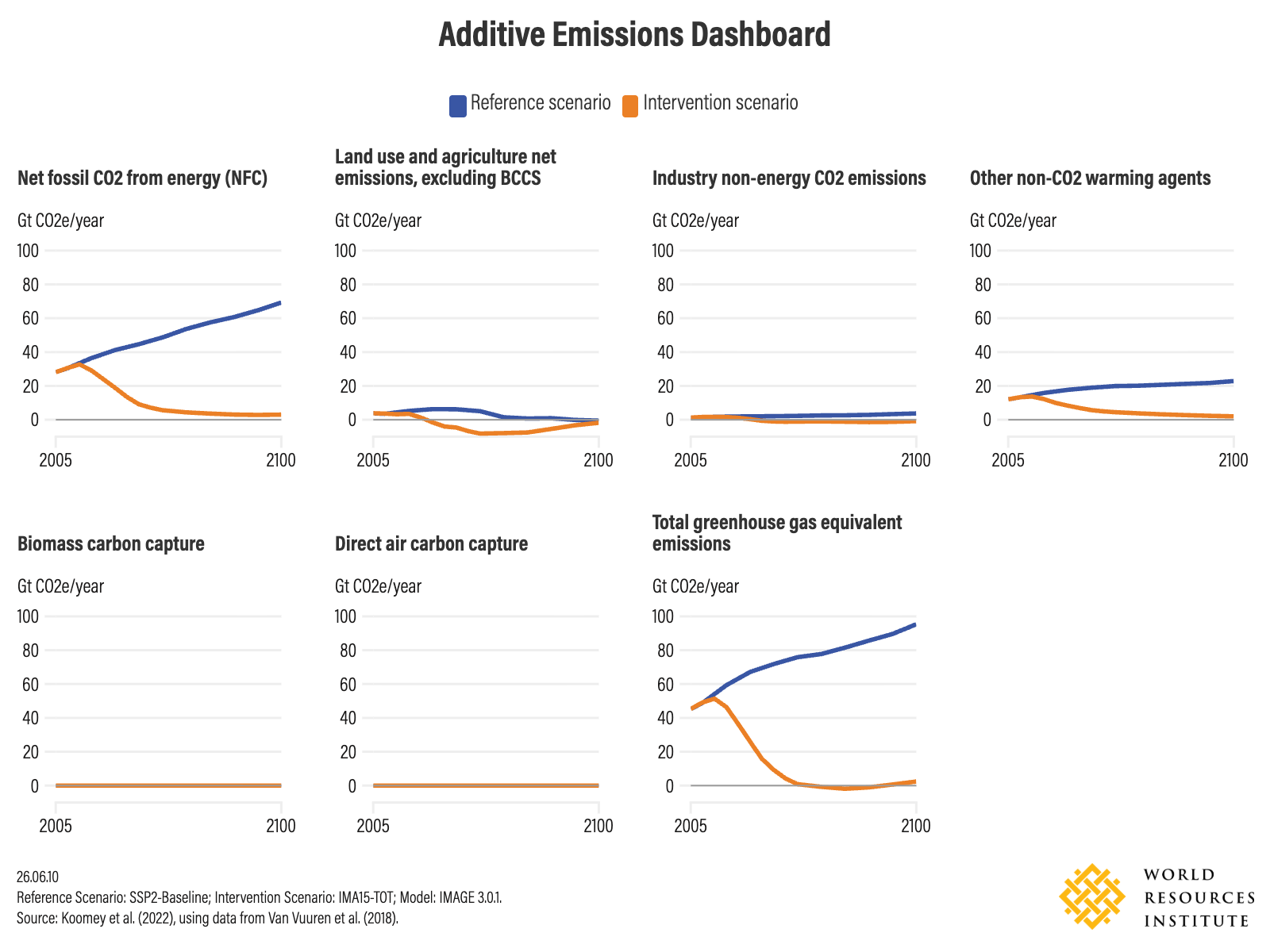
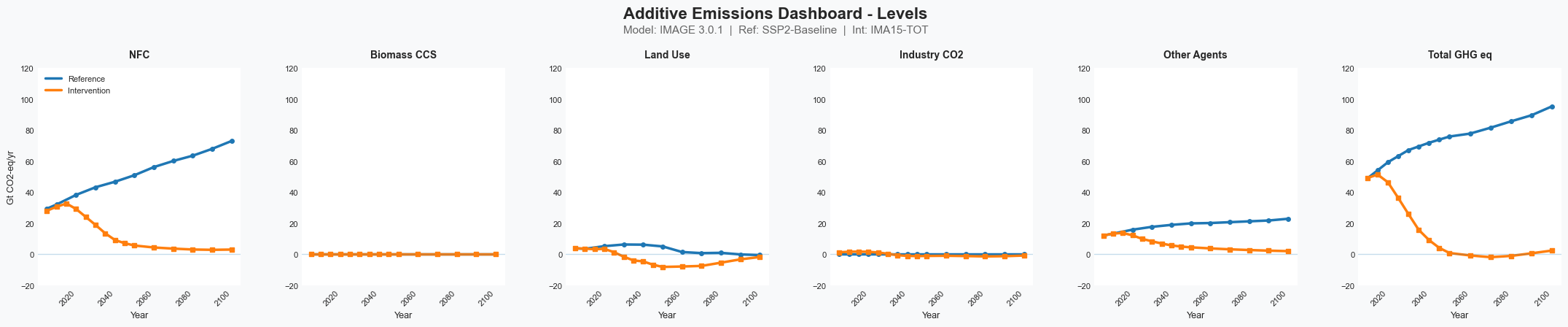
The third dashboard summarizes our "fully expanded decomposition," which includes the energy sector results in one pane, along with additive results for biomass carbon sequestration, direct air capture carbon sequestration, land use, industrial process carbon dioxide emissions and emissions of other gases than CO2 (other agents). The intervention scenario in this case has no biomass CCS and little change in industrial process emissions.
Additive emissions dashboard including emissions from outside the energy sector
These dashboards together give a complete and conceptually clear high-level picture of the evolving emissions of the global economy for a business-as-usual scenario and an emissions reduction scenario. Of course it's always possible to dig deeper, but these three dashboards are a great place to start. We hope that automating the creation of such dashboards will enable much faster troubleshooting and high-level analysis and comparison of scenarios.
View the notebook that explains how to make these graphs. Download the Excel workbook that contains the original data for the scenario pictured above.
1. Kaya, Yoichi. 1990. Impact of Carbon Dioxide Emission Control on GNP Growth: Interpretation of Proposed Scenarios. Proceedings of the IPCC Energy and Industry Subgroup of the Response Strategies Working Group. Paris, France:
2. Koomey, Jonathan, Zachary Schmidt, Karl Hausker, and Dan Lashof. 2022. "Exploring the black box: Applying macro decomposition tools for scenario comparisons." Environmental Modeling and Software. vol. 155, September. [https://doi.org/10.1016/j.envsoft.2022.105426]
3. Hummel, Holmes. 2006. Interpreting Global Energy and Emission Scenarios: Methods for Understanding and Communicating Policy Insights. Thesis, Interdisciplinary Program on Environment and Resources, Stanford University. [https://profiles.stanford.edu/holmes-hummel]
4. Koomey, Jonathan, Zachary Schmidt, Holmes Hummel, and John Weyant. 2019. "Inside the Black Box: Understanding Key Drivers of Global Emission Scenarios." Environmental Modeling and Software. vol. 111, no. 1. January. pp. 268–281. [https://www.sciencedirect.com/science/article/pii/S1364815218300793]
5. van Vuuren, Detlef P., Elke Stehfest, David E. H. J. Gernaat, Maarten van den Berg, David L. Bijl, Harmen Sytze de Boer, Vassilis Daioglou, Jonathan C. Doelman, Oreane Y. Edelenbosch, Mathijs Harmsen, Andries F. Hof, and Mariësse A. E. van Sluisveld. 2018. "Alternative pathways to the 1.5 °C target reduce the need for negative emission technologies." Nature Climate Change. 2018/04/13. [https://doi.org/10.1038/s41558-018-0119-8]
The continued expansion of the global data center industry has drawn increasing attention to onsite water use and the energy efficiency of infrastructure (which is linked to water used in cooling) [1]. Some data centers rely on water primarily for cooling, and as the sector grows, so does interest in understanding the scale and efficiency of that use.
The data center industry characterizes onsite water use intensity by calculating onsite Water Usage Effectiveness or WUE [2], using Equation 1:
WUE is the standard metric for evaluating the water efficiency of data center operations. It is expressed in liters of water per kilowatt-hour of computing electricity consumed on the data center premises (l/kWh). WUE can be reported on both a consumption and a withdrawal basis.
Waterconsumption refers to water that is used in the data center and subsequently lost through evaporation, drift, and other processes. Water withdrawal is the total volume of water extracted from any source for use in the data center. Withdrawal includes both water that is consumed and water that is returned to the water system in compliance with applicable standards. Withdrawal and consumption are related using Equation 2:
Accordingly, WUEconsumption (l/kWh) captures only the water lost at the data center while WUEwithdrawal (l/kWh) captures total water extracted for all purposes for the data center, regardless of whether that water is ultimately returned to the local watershed. Water that is withdrawn but not consumed can also affect the local watershed by temporarily reducing availability.
An additional complexity is that some data centers use reclaimed municipal wastewater or other recycled water [3], and accounting for such reclaimed water must be explicit when comparing WUE values from different companies, but it almost never is. Neither of the current protocols for estimating WUE differentiates between reclaimed water or potable water or from other sources [4, 5].
There is also water use associated with electricity generation [6], which means there can be tradeoffs between onsite water use and utility sector water use. Neither reclaimed water nor utility-sector water use are covered in this white paper.
The WUE equation mirrors the more commonly used metric for data center infrastructure power efficiency called the Power Usage Effectiveness or PUE [7], as shown in Equation 3:
PUE is a dimensionless ratio with a theoretical minimum value of 1.0. If PUE = 1.2, that means that for every kWh of computing electricity use there is another 0.2 kWh of other electricity use for cooling, fans, pumps, and power distribution losses. WUE and PUE are related in complex ways, but onsite water use can often lead to lower PUEs [8].
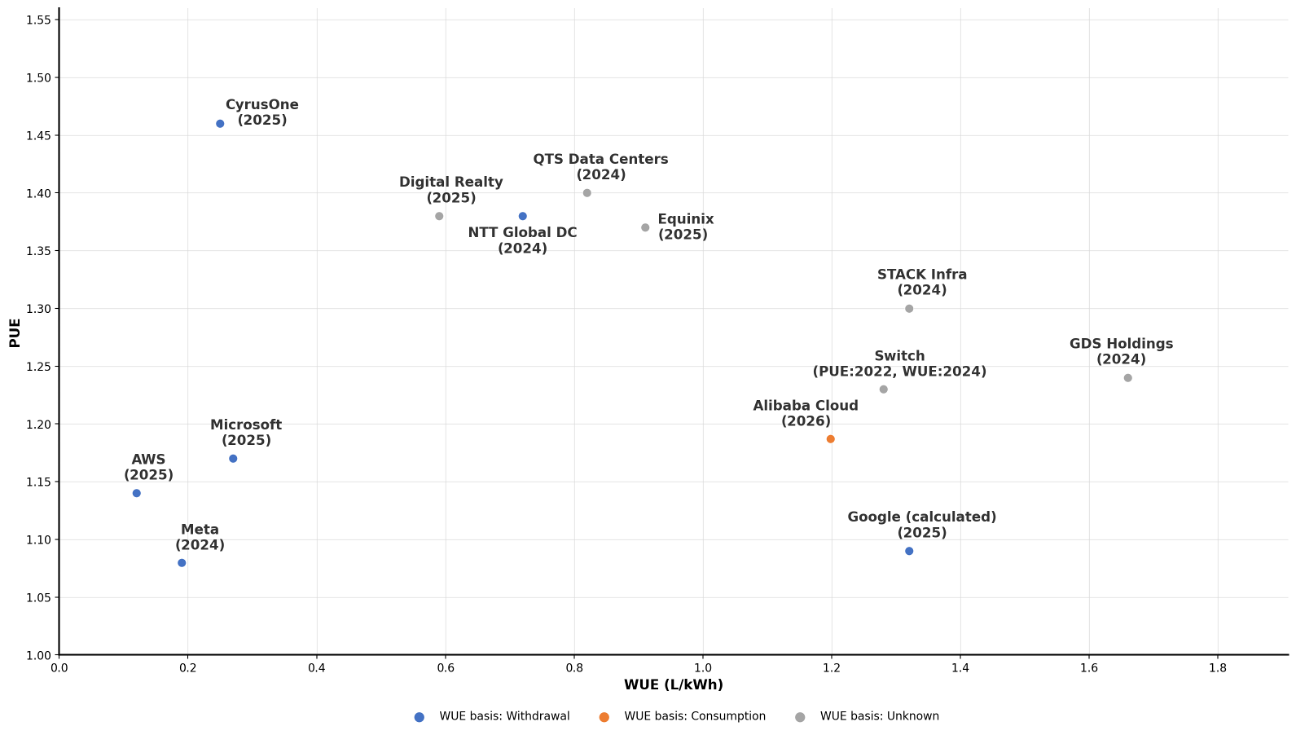
We identified published reports, news releases, and company blog posts by the top twenty data center operators and (where public data were available) compiled reported fleet-average WUE and PUE estimates. Figure 1 plots fleet average data for the thirteen companies that report both metrics, with data points color-coded by WUE basis: withdrawal (blue), consumption (orange), or unknown (gray). The variance in Figure 1 reflects differences in operational models, facility design, fleet composition, and historical technology choices.
Figure 1: PUE and onsite WUE by data center operator
Notes: Calculated value for Google is based on reported fleet-average data center water withdrawals and electricity consumption from Google's 2026 sustainability report [9]. To download a high resolution pdf version of the graph click here.
Operators that control IT workloads, IT equipment specifications, and facility design and operations can co-optimize server thermal tolerances, cooling design, and building configuration as a single system. Operators that serve multiple tenants typically control only the facility and must provision cooling for heterogeneous customer workloads with varying density, airflow, and thermal requirements. Similarly, operators with predominantly newer, purpose-built facilities have more flexibility to deploy current cooling technologies, while those with older portfolios face retrofit constraints that can limit fleet-level performance. It is also worth noting that seven of the twenty operators assessed do not report WUE publicly, which limits valid cross-industry comparisons.
The data indicate that operators with vertically integrated, purpose-built infrastructure tend to achieve lower PUE and WUE, though outcomes depend on cooling technology, fleet composition, historical technology choices, and geographic footprint. AWS and Meta deliver the lowest fleet WUE values, in that order; when PUE and WUE are considered together, Meta achieves the lowest combined values, followed by AWS, consistent with holistic approaches that co-optimize water and energy use. More research is needed on drivers of onsite water use differences, including climate, cooling system architecture, and the water implications of onsite water use for cooling [8].
Acknowledgements
We are grateful to Amazon Web Services for funding this research. The authors retained full analytical and editorial independence throughout. All analysis and writing was conducted solely by the authors.
References
1. Shehabi, Arman, Sarah Josephine Smith, Alex Hubbard, Alexander Newkirk, Nuoa Lei, Md AbuBakar Siddik, Billie Holecek, Jonathan G Koomey, Eric R Masanet, and Dale A Sartor. 2024. 2024 United States Data Center Energy Usage Report. Lawrence Berkeley National Laboratory. LBNL-2001637. December 19. [https://escholarship.org/uc/item/32d6m0d1]
5. ISO, and IEC. 2022. Information technology — Data centres key performance indicators – Part 9: Water usage effectiveness (WUE). International Organization for Standardization and International Electrotechnical Commission. ISO/IEC 30134-9:2022. March. [https://www.iso.org/standard/77692.html]
6. Peer, Rebecca A. M., Emily Grubert, and Kelly T. Sanders. 2019. "A regional assessment of the water embedded in the US electricity system." Environmental Research Letters. vol. 14, no. 8. 2019/07/29. pp. 084014. [http://dx.doi.org/10.1088/1748-9326/ab2daa]
8. Lei, Nuoa, Jun Lu, Arman Shehabi, and Eric Masanet. 2025. "The water use of data center workloads: A review and assessment of key determinants." Resources, Conservation and Recycling. vol. 219, 2025/06/01/. pp. 108310. [https://www.sciencedirect.com/science/article/pii/S0921344925001892]
For more than a decade, since my old friend Richard Hirsh and I wrote this article for the Electricity Journal (Hirsh and Koomey 2015), we've compiled Energy Information Administration data every year to track recent developments for the US.
This compilation can be tricky because of quirks in the data . For example, solar electricity generation "behind the meter" (i.e., in a house or business) is not counted in electricity sales, nor is it always counted under "generation", but is tracked in a separate data series. For a real estimate of both electricity use and generation the behind the meter solar needs to be added back into both series. This didn't matter much in earlier years, but nowadays the onsite solar contribution is big enough to matter and growing fast.
We've made that correction and added things up properly in our newest excel workbook, downloadable here. The data now go from 1950 through 2025. The source data are all posted at the EIA's Open Data site.
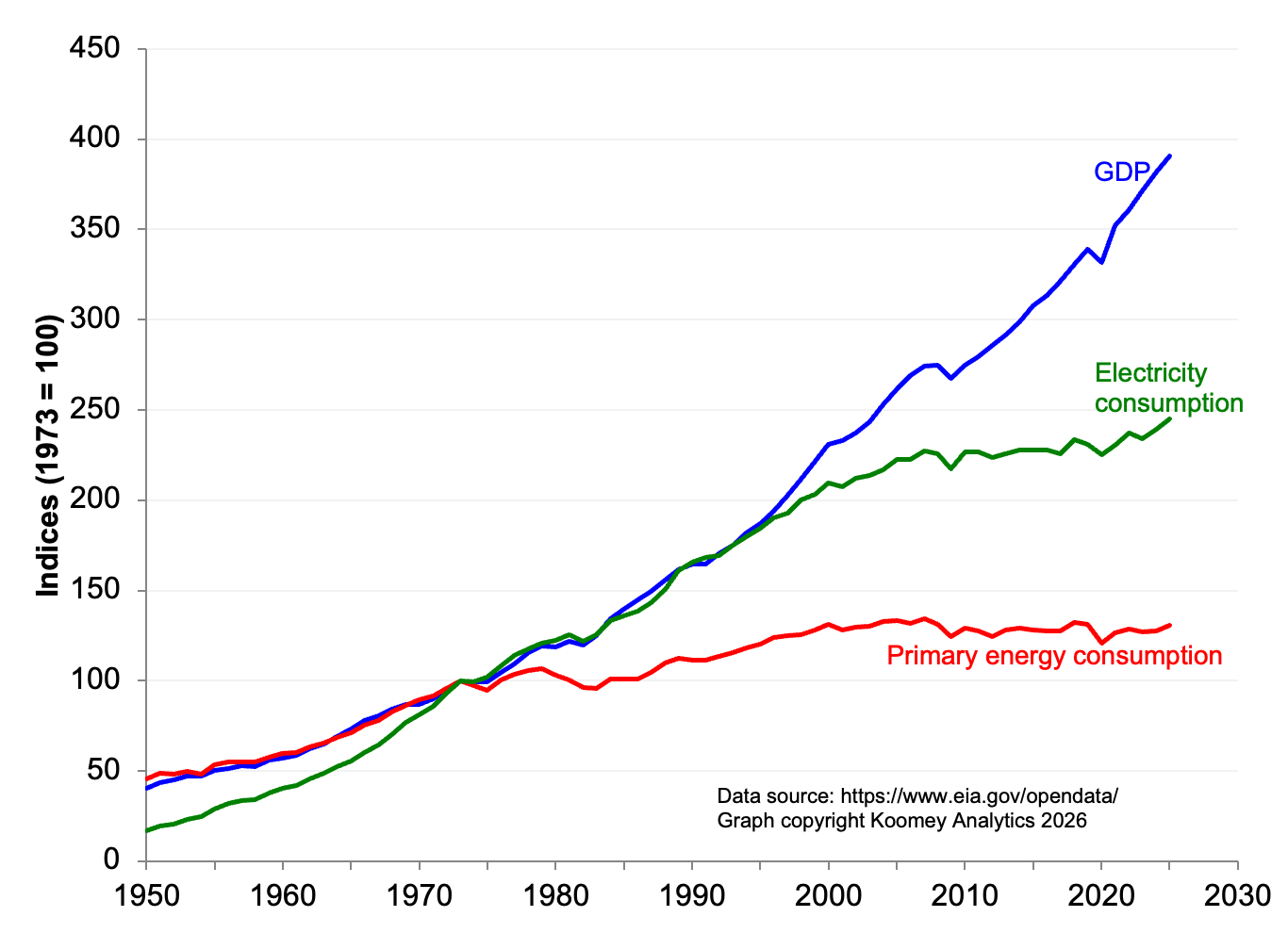
The most important top line results are contained in this graph, showing indices of energy use, electricity use, and real GDP over time (1973=1.0):
Figure 1: Indices of energy use, electricity use, and real GDP over time
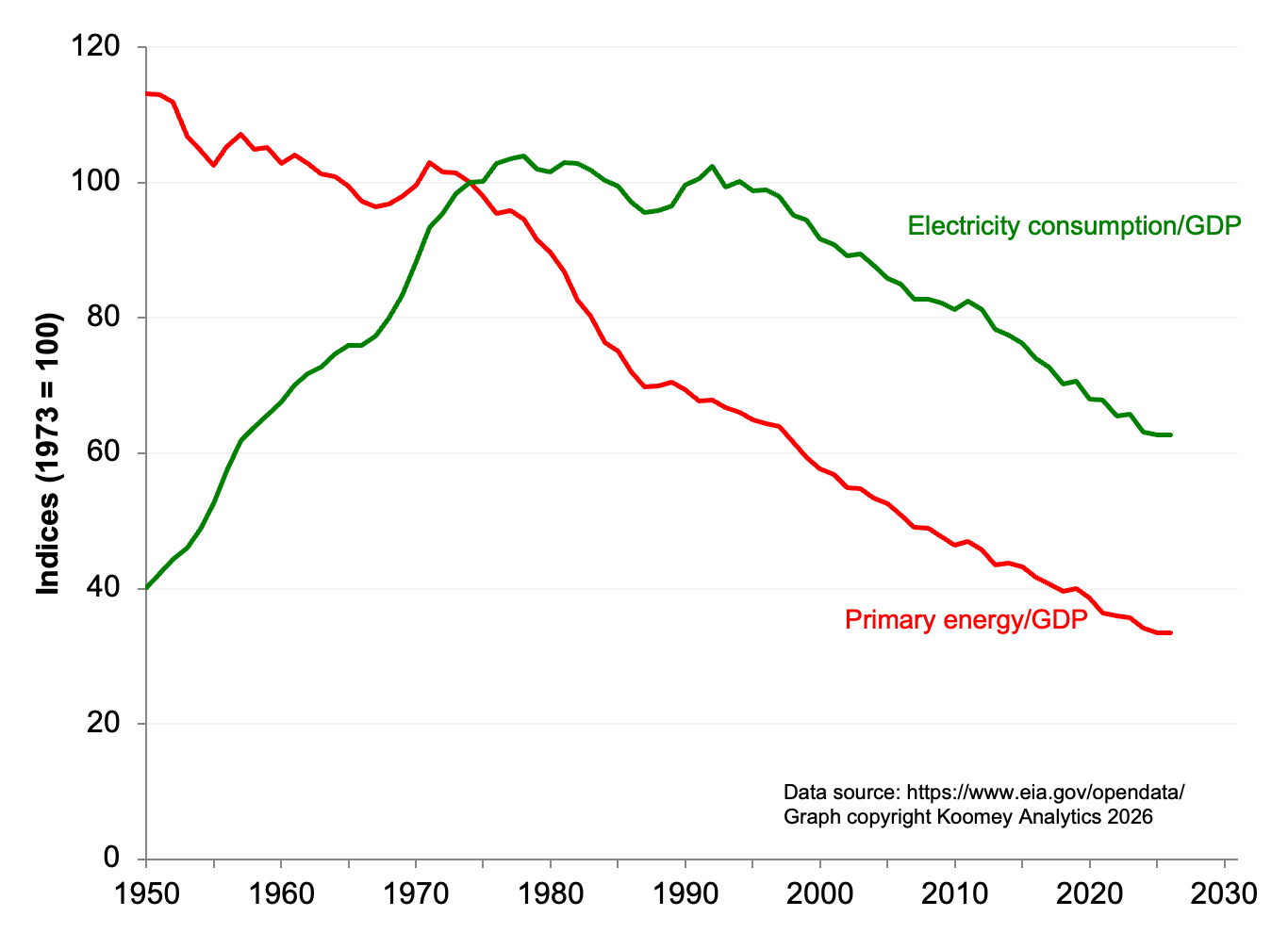
Before 1973, primary energy and Gross Domestic Product tracked closely, which is what observers in that period called "the ironclad link" between energy and GDP (Koomey 1984). Electricity consumption grew faster than GDP during that period, because the economy was electrifying.
The 1970s oil shocks broke the ironclad link between energy and GDP, and primary energy stayed more or less flat while GDP continued to grow. Electricity growth then tracked GDP growth almost exactly, until the mid-1990s, when another discontinuity arose (Davis et al. 2003). After that time electricity use and GDP appeared to "decouple", just as energy use and GDP did from the 1970s onwards.
Interestingly, the past one or two years have seen moderate growth in electricity use and "recoupling" of electricity use and GDP. From 2018 to 2023 there was zero electricity growth, but growth from 2023 to 2024 was 2.1%, and growth from 2024 to 2025 was 2.4%. Some of this growth is related to general economic activity, some to electrification, and some to the data center buildout (Koomey et al. 2025 and 2026).
This development shows up clearly in this graph, showing indices of energy use and electricity use per dollar of GDP over time (1973=1.0).
Figure 1: Indices of energy use/GDP and electricity use/GDP over time
One or two years do not a trend make, but we'll need to track these data carefully going forward. There is no evidence of "explosive" growth nationally, but the last two years of growth is not uniform geographically, and some regions (particularly PJM and ERCOT) are showing much more rapid growth than others (Koomey et al. 2026).
Feel free to reuse and share these data and graphs
If you reuse these graphs, all we ask is that you give appropriate credit, stating "This graph courtesy of Koomey Analytics, 2026", or something like that. Please don't mess with the data or equations, but if you find errors that need fixing, please contact us.
References
Davis, W. Bart, Alan H. Sanstad, and Jonathan G. Koomey. 2003. "Contributions of Weather and Fuel Mix to Recent Declines in U.S. Energy and Carbon Intensity." Energy Economics (also LBNL-42054). vol. 25, no. 4. July. pp. 375-396. [http://www.sciencedirect.com/science/article/pii/S0140988302000944]
Hirsh, Richard F., and Jonathan G. Koomey. 2015. "Electricity Consumption and Economic Growth: A New Relationship with Significant Consequences?" The Electricity Journal. vol. 28, no. 9. November. pp. 72-84. [http://www.sciencedirect.com/science/article/pii/S1040619015002067]
Koomey, Jonathan G. 1984. Energy Policy in Transition: The Rise of Conservation. A.B. Honors Thesis, History and Science Department, Harvard University.
Koomey, Jonathan, Zachary Schmidt, Priya Sreedharan, Nikhil Kumar, and Taylor McNair. 2026. Separating fact from fiction in data center electricity forecasts: A guide for regulators. Bay Area, California: A joint report by Koomey Analytics and Gridlab. March. [https://gridlab.org/portfolio-item/data-center-load-forecast-report/]
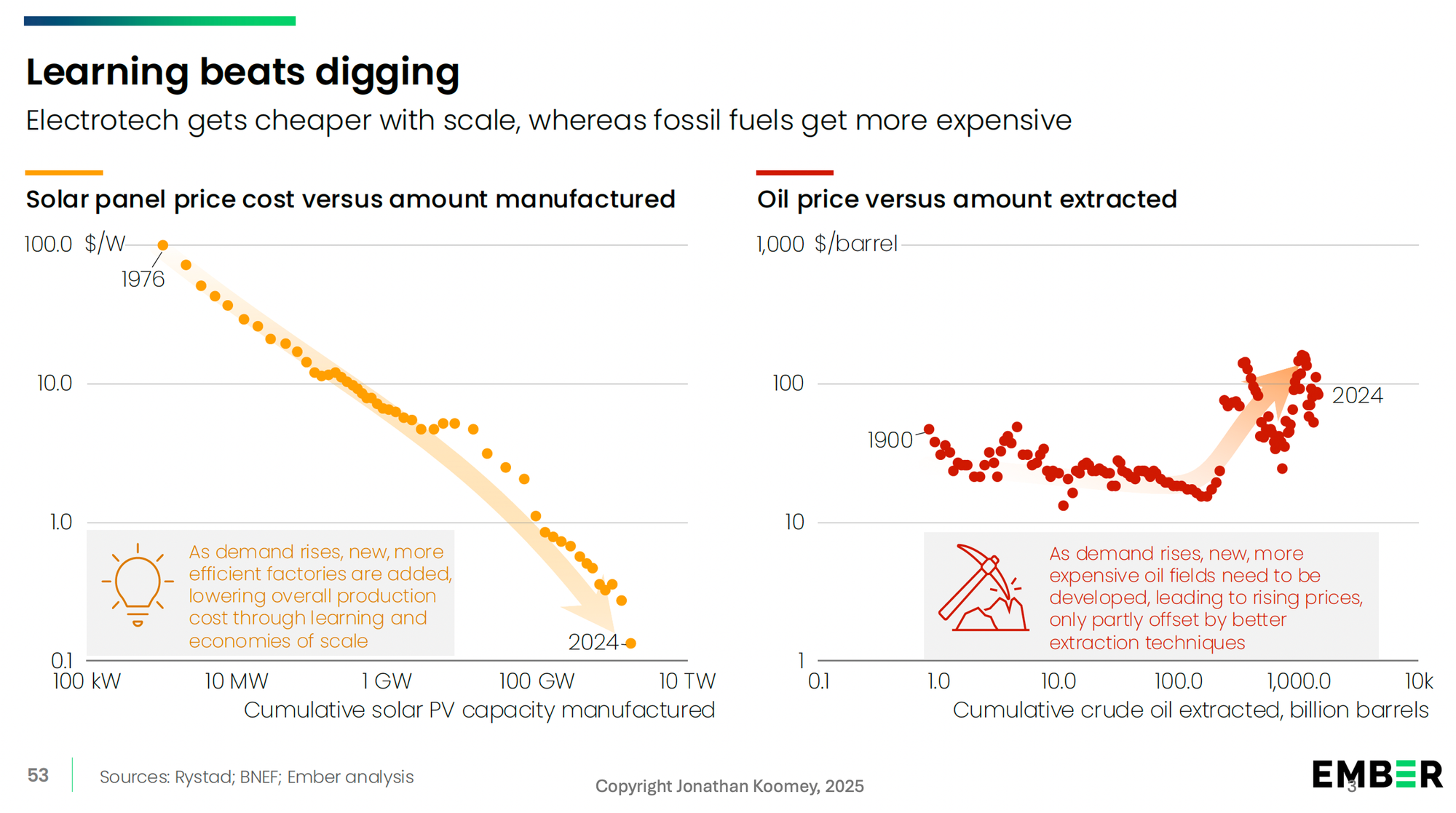
My talk, titled "A rapid tour of recent developments in solar, wind, batteries and enhanced geothermal power generation" summarizes recent progress with renewables. The key slide is this one, from EMBER:
What many fail to understand is just how powerful manufacturing scale economies, network externalities, learning by doing, and other forms of increasing returns to scale can be. These effects drive down costs as we deploy more.
While fossil fuel technologies also experience learning by doing, they are in an ultimately losing battle with depletion, as fossil fuel deposits get harder and harder to access. Manufactured technologies harvesting renewable energy flows can continue to drive down costs for a very long time, and the abundance of such flows (solar in particular) means that there is no prospect of those cost reductions slowing down anytime soon.
I’m proud to share a report we created in collaboration with Gridlab, released today, Monday March 23, 2026, 9am PT. Below is a link to the final report.
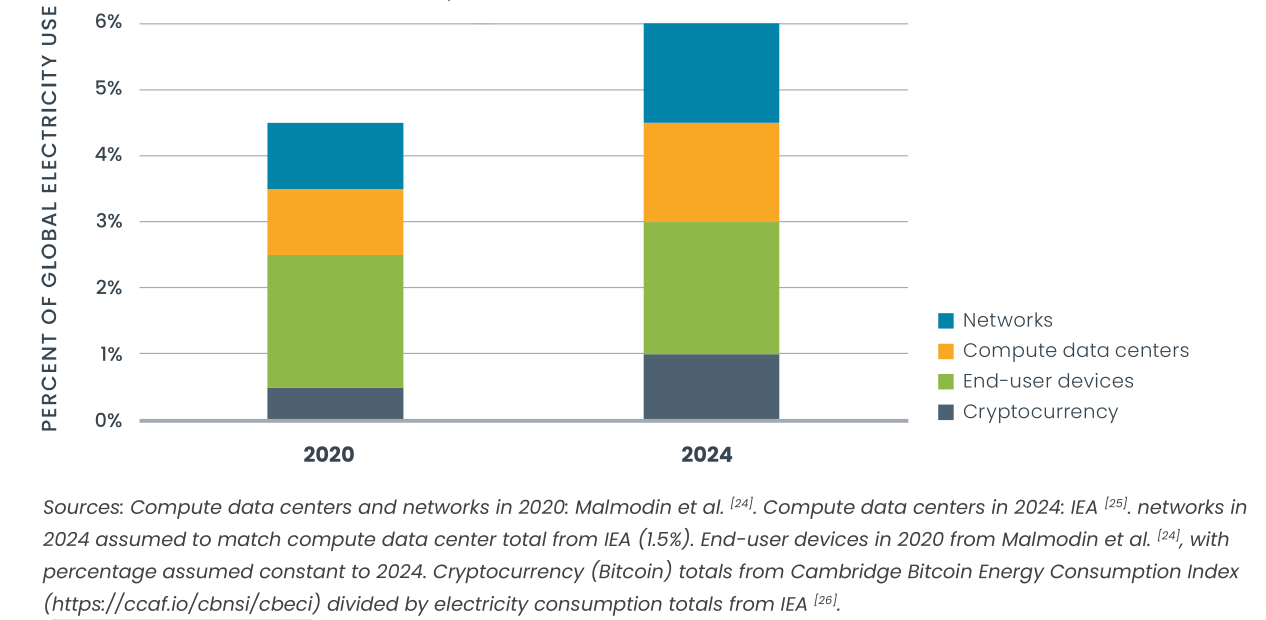
· All computing (including compute data centers, both AI and conventional) was responsible for about 6% of all electricity consumption globally in 2024, and while compute data centers appear to be growing, they’re starting from a relatively small base (about 1.5% of the world’s electricity in 2024). For the US, which has a higher concentration of data centers (and particularly AI facilities) total data center electricity use was about 4.4% in 2023, up from about 2% in 2020.
· For forecasts of data center electricity use, there is uncertainty on both the potential growth in service demand (the amount of compute we’ll use) and the increase in efficiency of delivering that service demand. There are also open questions about potentially inflated or duplicate interconnection requests submitted by data center developers, which may lead to over-estimation of future electricity loads.
· Future projections of data center electricity demand are highly uncertain, so it’s critical for regulators and utilities to examine carefully the assumptions driving forecasts of explosive demand growth in the regions where these projections are emerging.
· Analysts, researchers, and policy makers should avoid the common tendency to overestimate the energy and environmental effects of information technology, which has been well documented for decades. They should also avoid citing or using “amazing factoids” until they’ve analyzed such claims independently.
This report also includes a list of follow-on resources and references for those who want to investigate further.
A key figure: Approximate percentages of total global electricity use represented by different types of computing and network equipment in 2020 and 2024
On February 10th, Veolia and Microsoft released a report on AI and energy, water, and waste management. One of the short chapters in that report is a framing article about AI and energy use by me and Eric Masanet at UC Santa Barbara.
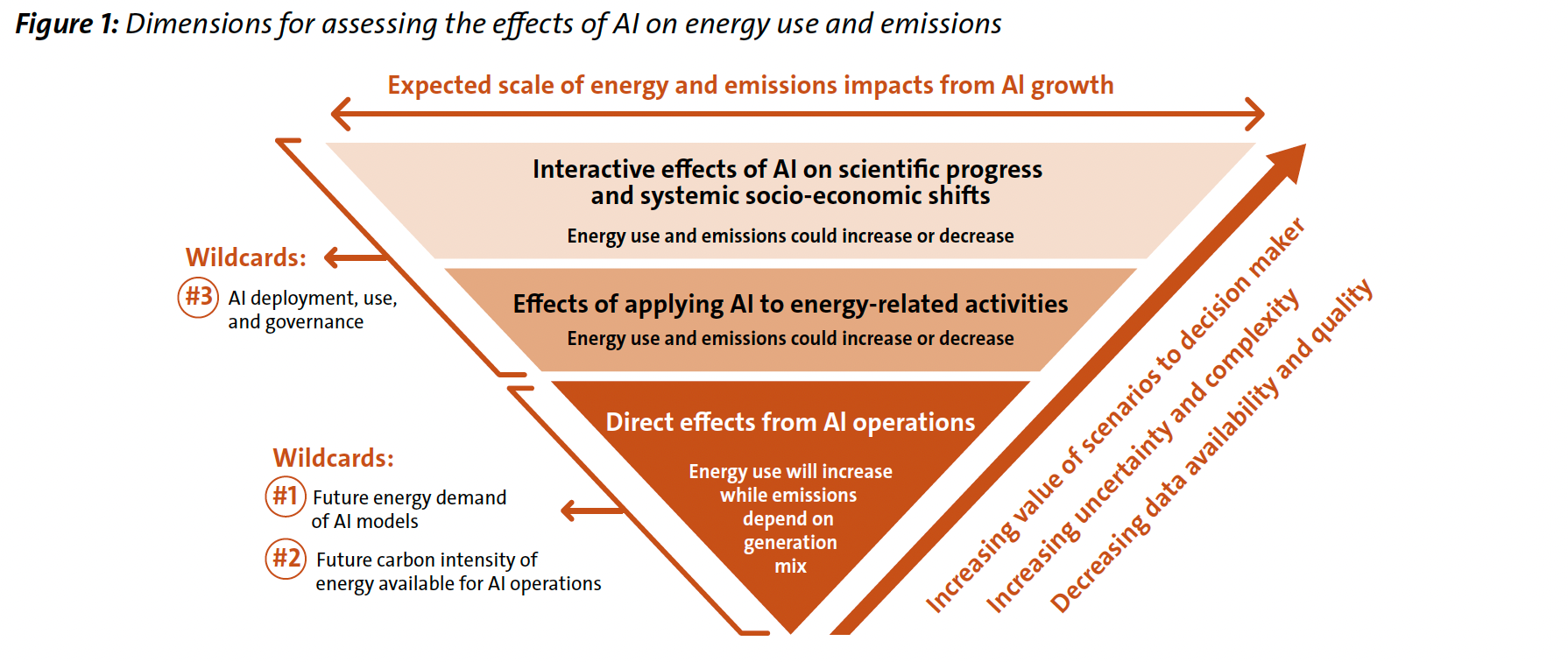
The article distinguishes three ways AI might affect energy use:
• Direct effects of AI operations
• Effects of applying AI to energy-related activities
• Interactive systemic effects of AI on the broader economy
Figure 1 from the article illustrates these three potential effects and the uncertainties affecting each of them.
Conceptual figure illustrating three ways AI might affect energy and the uncertainties related to these effects
Here's the abstract:
Many recent assessments of the effects of artificial intelligence (AI) systems lack rigor. The electricity use and emissions of AI operations are often viewed as the most salient issues, but use of AI systems can have important effects when they are deployed, and such deployments can lead to complicated systemic interactions between AI systems, the broader energy system, and the economy as a whole.
All effects of AI deployment are subject to deep uncertainty, but analyzing the effects of AI operations is usually the most feasible. Human understanding of the effects of AI deployments on specific domains and on interactions with the broader economy is in its infancy, but we know that these effects could either increase societal energy use (e.g., by making fossil fuel or geothermal extraction cheaper, or fueling increased consumer consumption by more targeted advertising) or decrease societal energy use (e.g., by enabling deployment of batteries to increase renewable energy adoption, which is more efficient than thermal plants on a primary energy basis, or improving efficiency throughout the broader economy). It is impossible to know in advance the sign of the net effect over the long term.
For these less well understood effects, researchers should design consistent test cases, focusing on measuring economic, energetic, and environmental parameters before and after the deployment of new AI systems. For testing interactions, new kinds of large-scale economic models may be needed, as current models do not represent the effects of technology changes in a sufficiently detailed and systematic way.
The three ways AI affects energy use mirror the structure from this excellent article.
Kaack, Lynn H., Priya L. Donti, Emma Strubell, George Kamiya, Felix Creutzig, and David Rolnick. 2022. "Aligning artificial intelligence with climate change mitigation." Nature Climate Change. vol. 12, no. 6. 2022/06/01. pp. 518-527. [https://doi.org/10.1038/s41558-022-01377-7]
In much earlier drafts (a few years ago) we referenced this one and should have done it in the final article, but somehow that reference got dropped after many iterations. Apologies to those authors, we will make sure we include that reference in any follow-on work.
In the previous post, we announced our new Python package that helps modelers explore the key greenhouse gas emissions drivers in their scenarios. This post shows examples of visual dashboards that these tools allow you to create.
There are three main dashboards, as documented in Koomey et al. 2019 and Koomey et al. 2022. The first shows what we call "Kaya factors", like population, gross world product, final energy, primary energy, fossil fuel primary energy, total fossil carbon emissions, and net fossil carbon emissions after accounting for sequestration. We use runs from IMAGE 3.0.1. The baseline is SSP2 and the intervention case is IMA15-TOT, a scenario that keeps global temperatures from exceeding 1.5 C. The runs are documented in van Vuuren et al. 2018.
The second dashboard shows what we call the "Kaya ratios", which are the terms in the expanded Kaya identity. These include population, economic activity per person, final energy per dollar of economic activity, primary energy per unit of final energy, the fossil fuel fraction of primary energy, total fossil carbon per unit of primary energy, and the ratio of fossil carbon reaching the atmosphere to the fossil carbon combusted in the energy system.
The third dashboard summarizes our "fully expanded decomposition", which includes the energy sector results in one pane, along with additive results for biomass CCS, land use, industrial process carbon dioxide emissions, and emissions of other gases than CO2 (other agents). The intervention scenario in this case has no biomass CCS and little change in industrial process emissions.
These dashboards together give a complete high-level picture of the evolution and emissions of the global economy for a business-as-usual scenario and an emissions reduction scenario. Of course it's always possible to dig deeper, but these three dashboards are a great place to start. We hope that automating the creation of such dashboards will enable much faster troubleshooting and high-level analysis of scenarios.
To view the notebook that explains how to make these graphs, go here.
To download the Excel workbook that contains the original data for the scenario pictured above, go here.
References
Koomey, Jonathan, Zachary Schmidt, Holmes Hummel, and John Weyant. 2019. "Inside the Black Box: Understanding Key Drivers of Global Emission Scenarios." Environmental Modeling and Software. vol. 111, no. 1. January. pp. 268-281. [https://www.sciencedirect.com/science/article/pii/S1364815218300793]
Koomey, Jonathan, Zachary Schmidt, Karl Hausker, and Dan Lashof. 2022. "Exploring the black box: Applying macro decomposition tools for scenario comparisons." Environmental Modeling and Software. vol. 155, September. [https://doi.org/10.1016/j.envsoft.2022.105426]
van Vuuren, Detlef P., Elke Stehfest, David E. H. J. Gernaat, Maarten van den Berg, David L. Bijl, Harmen Sytze de Boer, Vassilis Daioglou, Jonathan C. Doelman, Oreane Y. Edelenbosch, Mathijs Harmsen, Andries F. Hof, and Mariësse A. E. van Sluisveld. 2018. "Alternative pathways to the 1.5 °C target reduce the need for negative emission technologies." Nature Climate Change. 2018/04/13. [https://doi.org/10.1038/s41558-018-0119-8]
TLDR: Below you can download a new open-source python package for calculating and comparing key drivers of emissions using outputs from Integrated Assessment Models.
In 2004-2006 I served on the dissertation committee of Holmes Hummel at Stanford University. Holmes's thesis showed how a commonly used identity (called the Kaya Identity) could enable deeper understanding of the energy-sector outputs from Integrated Assessment Models (IAMs). These models help analysts assess key drivers affecting energy use and emissions in long term greenhouse gas emissions scenarios.
The most common version of the Kaya Identity is the four factor version, which reads as follows:
Four factor Kaya identity, showing how energy-sector CO2 emissions relate to population, wealth per person, primary energy use per dollar, and carbon intensity of primary energy, respectively.
As Holmes showed, the four factor Kaya identity masks complex system dynamics in energy scenarios, so she created a more comprehensive version, which in its fully developed form looks like this (see Koomey et al. 2019, below):
Expanded Kaya identity, showing how energy-sector CO2 emissions relate to population, wealth per person, final energy use per dollar, energy supply loss factor, the fraction of primary energy supplied by fossil, fuels, the carbon intensity of fossil fuels supplied, and the net emissions of CO2 from energy sector after sequestration, respectively.
Holmes finished and defended her dissertation in December of 2006. I and a few others used her tools and it soon became clear that some additional tweaking was needed. Over many years, Holmes, John Weyant, my colleague Zachary Schmidt, and I developed the analytical tools more fully, which culminated in our 2019 refereed journal article laying out the theory and methods supporting this work:
Koomey, Jonathan, Zachary Schmidt, Holmes Hummel, and John Weyant. 2019. "Inside the Black Box: Understanding Key Drivers of Global Emission Scenarios." Environmental Modeling and Software. vol. 111, no. 1. January. pp. 268-281. [https://www.sciencedirect.com/science/article/pii/S1364815218300793]
One of the key additions was summarizing emissions for all sectors, including the energy sector (as characterized in the expanded Kaya identity), land use, industrial process CO2 emissions, biomass carbon capture and storage (CCS), and emissions of other gases than CO2 (like CH4, N2O, and F-gases). This fully expanded decomposition, which characterizes total carbon equivalent emissions is summarized in this equation:
C for fossil fuels comes from the equation above. The negative term for CS is carbon sequestration from biomass combustion. For scenarios including direct air capture, an additional negative term for that option would also need to be added.
We applied these tools to two scenarios in our 2022 refereed journal article:
Koomey, Jonathan, Zachary Schmidt, Karl Hausker, and Dan Lashof. 2022. "Exploring the black box: Applying macro decomposition tools for scenario comparisons." Environmental Modeling and Software. vol. 155, September. [https://doi.org/10.1016/j.envsoft.2022.105426]
Holmes built her initial tools in Excel workbooks, and these served well for years, but it proved hard to convince modelers to integrate spreadsheets into their workflows, which were largely automated using Python and other more modern tools. With that reality in mind (and with funding from World Resources Institute) we set out to recreate our tools as a Python package that modelers could just grab and use.
Today we are releasing that Python package for general use.
Virtually all IAMs generate the required data to use our tools, and we stuck closely to the terminology and definitions embodied in IIASA's PYAM tools.
To download the Python package directly from PyPI, click here.
To view the Github project page, where you can also download the package, click here.
To view an example notebook in Github showing how to use the tools, click here.
The Python package is licensed under Apache 2.0, which is an open-source license that allows free use, modification, and distribution for commercial or private use. Any contributors automatically grant a royalty-free license to any patented algorithms they add to the software.
To view example dashboards generated by these tools, go here.
We are confident that these tools will facilitate analysis of IAM-based scenarios, assist in troubleshooting those scenarios, and increase understanding of key drivers affecting greenhouse gas emissions
Please do email us if you have questions or suggestions.
With recent growth in the data center industry has come increasing scrutiny about direct water use in these facilities [1]. Data center water use varies by facility type, location, and operational choices [2, 3]. These facilities use water because it’s usually more energy efficient to cool computing equipment using water than air.
All water use is not created equal. Some facilities use potable water for cooling, some use surface water or groundwater, and some use recycled water, often reclaimed from municipal wastewater. The environmental effects of data centers using reclaimed municipal wastewater (hereafter “reclaimed water”) are much smaller than using other water sources, and this strategy is becoming more widely used. The widespread availability of municipal wastewater treatment infrastructure in cities around the world makes reclaimed water a practical solution that can be implemented in many locations, supporting the global expansion of sustainable data center operations.
This blog post summarizes a brief white paper assessing the prevalence of reclaimed municipal wastewater for data center cooling, focusing on the operations of the top ten companies as assessed by Data Centre Magazine in 2025 (listed in alphabetical order): AWS (Amazon),CyrusOne, Digital Realty, Equinix, GDS, Google, Meta, Microsoft Azure, NTT, and Telehouse. For facilities owned by one company housing computers owned by another company, we ignored the owners of the computing equipment and assigned each facility to its owner/operator.
There is relatively little public data about reclaimed water use for data center cooling, so Zachary Schmidt and I identified publicly available sources from which we could reliably infer the presence or absence of reclaimed water use by facilities owned by these companies around the world. We rely on published reports, news releases, news reports, data center mapping websites, utility bills, utility contracts, conference presentations, and satellite imagery to substantiate the findings. The report links to our sources.
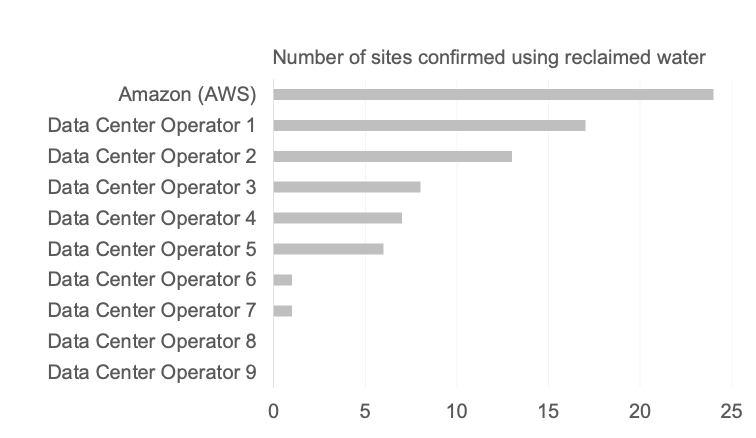
Figure 1 contains the results. As of December 2025, Amazon has the highest number of confirmed sites using reclaimed water for cooling, at 24, with two other companies following with 17 and 13 facilities. Three other companies have between 6 and 8 facilities, with the rest at zero or one facility using reclaimed water. Note that some facilities not using reclaimed water don’t use ANY water onsite for cooling, but that choice generally means cooling for these facilities is less energy efficient than it would be if onsite water were used.
Figure 1: Global tally of data center sites using reclaimed municipal wastewater for cooling
More work is needed to identify locations for which there is no current public information about their use of reclaimed water. Companies using reclaimed water should be happy to publicize it, so we think our relative rank order is unlikely to change much with the addition of new information, but we hope the tally will increase over time. We encourage all data center companies to consider the use of reclaimed water for cooling, as concern over water used by data centers continues to increase.
1. Shehabi, Arman, Sarah Josephine Smith, Alex Hubbard, Alexander Newkirk, Nuoa Lei, Md AbuBakar Siddik, Billie Holecek, Jonathan G Koomey, Eric R Masanet, and Dale A Sartor. 2024. 2024 United States Data Center Energy Usage Report. Lawrence Berkeley National Laboratory. LBNL-2001637. December 19. [https://eta-publications.lbl.gov/publications/2024-lbnl-data-center-energy-usage-report]
2. Lei, Nuoa, and Eric Masanet. 2022. "Climate- and technology-specific PUE and WUE estimations for U.S. data centers using a hybrid statistical and thermodynamics-based approach." Resources, Conservation and Recycling. vol. 182, 2022/07/01/. pp. 106323. [https://www.sciencedirect.com/science/article/pii/S0921344922001719]
3. Lei, Nuoa, Jun Lu, Arman Shehabi, and Eric Masanet. 2025. "The water use of data center workloads: A review and assessment of key determinants." Resources, Conservation and Recycling. vol. 219, 2025/06/01/. pp. 108310. [https://www.sciencedirect.com/science/article/pii/S0921344925001892]
Summary: Recent reports of unprecedented growth in electricity demand from data centers have appeared in many major news outlets. These headlines encapsulate two widely expressed concerns. First, that rising energy demand from data centers could further overburden aging power infrastructure. Second, this new source of demand could jeopardize efforts to mitigate climate change. This report explores the accuracy of such narratives and explains the key drivers of load growth for data centers. We find that:
National and regional load growth are following different trends: Despite alarming headlines, national electricity demand has not shown rapid growth, although regional variations exist. For example, the states of Virginia and Georgia are experiencing substantial electricity load growth.
Sources of electricity load growth vary: Data centers are projected to account for at most 25% of electricity demand by 2030, a substantial but not dominant share of new load. Onshoring of manufacturing, electrification of vehicles, and building energy use are expected to contribute much more to electricity demand growth than data centers.
Future load growth due to data centers is uncertain: The exact trajectory of future electricity use by data centers is unknown due to 1) improvements in AI system efficiency; 2) the unpredictability of demand for AI services; and 3) limits in manufacturing production capacity of AI chips, servers, and associated infrastructure.
Although data center electricity use is growing again, exactly how that load growth will play out is uncertain. This report puts these uncertainties into context to help inform our nation’s response to load growth to ensure affordable, resilient, reliable U.S. energy.
When we first created the Koomey.com site circa 2010, we used Tumblr, which was a capable blogging site. We customized the site (with some difficulty) but it mostly performed well for a long time (almost 15 years).
This past summer we started investigating other options, and soon settled on Ghost. Many companies use it to handle newsletters with subscriptions, but it also works well for blog site hosting. It's open source and pricing is flat fee subscription, rather than a percentage of revenues like Substack (although tiers for bigger orgs and sites cost more).
One of the important learnings from recent technology developments is that commercial sites have a life cycle, and in their end stages undergo what Cory Doctorow has called "enshittification". The idea is that new sites launch to please users, but over time they move more and more to please their investors, which hurts the user experience as the company sucks more and more revenue from customers. It's not a universal law, but it is often true.
Our shift to Ghost insulates us somewhat from enshittification. Their business model is subscriptions and hosting and if their hosting becomes problematic we can just spin up our own Ghost instance (it's open source).
We don't anticipate doing paid newsletters, but Ghost will make that easy if we decide to go that route. The switch involve a bunch of futzing, but the site is looking better than ever, and now we can start thinking about how to tweak structure and content to better serve our clients.
As we worked to convert the site to Ghost, we also realized that the nature and purpose of the site had to shift, from being Jon Koomey's personal site to being a corporate site for Koomey Analytics, the small research company that Jon leads. That led to some obvious changes, but we think it holds together.
Expect more changes and improvements in the near future. Please do get in touch with ideas, suggestions, and new data sources. We're always happy to hear from like-minded data and analysis geeks.
The modern data center lies at the heart of today’s digital global economy, performing computing tasks like e-commerce, communications, search, financial modeling, and artificial intelligence (AI). Data centers undergo constant change, both in the workloads they run 24x7 and the hardware that runs those applications.
Lack of adequate planning and management can lead to under-provisioning, over-heating, and lost capacity, all of which undermine the profitability and sustainability of these critical facilities. Today’s AI and high-performance compute nodes can exacerbate these problems.
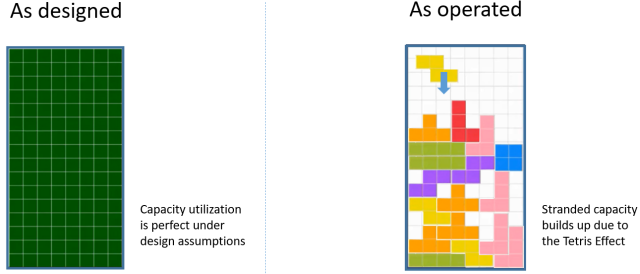
When IT loads deviate from the original data center design, stranded power and cooling capacity are the result. A simple analogy helps explain the problem. Most people are familiar with the game of Tetris TM, in which blocks fall at a regular pace, and the player’s task is to place those blocks in the correct orientation, filling up the space as thoroughly as possible.
In the simplest case, the blocks are of uniform size and shape (i.e., they conform precisely to what data center designers specified initially), and it’s easy for the user to fill up the space completely. The example on the left-hand side of Figure 1 illustrates this case. On the right-hand side, the TetrisTM player cannot make the shapes fit perfectly because their shapes are random, and they just keep coming. That leaves gaps (white space) between the shapes, which represent lost capacityin the data center. White space above the colored bricks represents unused capacity.
Figure 1: Lost capacity as illustrated by the game of Tetris
Lost data center capacity is exactly analogous to what are often called “zombie servers” in data centers, which are servers using electricity but doing nothing useful. This time it’s part of the data center itself (the cooling and power infrastructure) that is costing money (and lots of it) but not enabling any useful computing.
In this paper, we describe the challenges data center planners face and the potential for digital twins to help better manage data centers over their useful lives. Combining digital twins with computational fluid dynamics software (models that simulate and predict the behavior of airflow and heat in data centers) helps planners and managers save millions of dollars, reduce energy waste, increase profitability, improve data center reliability, predict failures, and lengthen the useful lifespan of costly data center equipment.
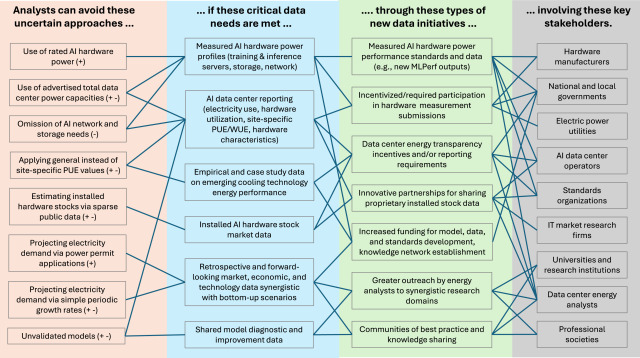
As the famous quote from George Box goes, “All models are wrong, but some are useful.” Bottom-up AI data center models will never be a perfect crystal ball, but energy analysts can soon make them much more useful for decisionmakers if our identified critical data needs are met. Without better data, energy analysts may be forced to take several shortcuts that are more uncertain, less explanatory, less defensible, and less useful to policymakers, investors, the media, and the public. Meanwhile, all of these stakeholders deserve greater clarity on the scales and drivers of the electricity use of one of the most disruptive technologies in recent memory. One need only look to the history of cryptocurrency mining as a cautionary tale: after a long initial period of moderate growth, mining electricity demand rose rapidly. Meanwhile, energy analysts struggled to fill data and modeling gaps to quantify and explain that growth to policymakers—and to identify ways of mitigating it—especially at local levels where grids were at risk of stress. The electricity demand growth potential of AI data centers is much larger, so energy analysts must be better prepared. With the right support and partnerships, the energy analysis community is ready to take on the challenges of modeling a fast moving and uncertain sector, to continuously improve, and to bring much-needed scientific evidence to the table. Given the rapid growth of AI data center operations and investments, the time to act is now.“
I worked with my longtime colleagues Eric Masanet and Nuoa Lei on this article.
You shouldn’t worry at all about your digital footprint, as we discussed in the show. It’s small and constantly improving, and much of the equipment uses the same amount of electricity when it’s idle as when it’s fully loaded, so your actions won’t change electricity use or emissions.
If you want to take personal action on climate, you should
* Vote against climate deniers and fossil fuel apologists. * Replace fossil fuel equipment at end of life with electrified equipment. That’s when it’s most cost effective. Buy heat pumps instead of furnaces, heat pump water heaters instead of normal water heaters, induction cooktops instead of gas cooktops, heat pump dryers instead of gas dryers, and electric vehicles instead of gasoline or diesel vehicles (if not ready for full electric, buy a plug in hybrid). * Fly less. * Drive less. * Eat less red meat. * Vote against climate deniers and fossil fuel apologists again!
Much of what needs to happen is to change our SYSTEMS, which is not under the control of most individuals, but the actions above are both under individual control and highly impactful. For more ideas, see our 2022 book:
Koomey, Jonathan, and Ian Monroe. 2022. Solving climate change: A guide for learners and leaders. Bristol, UK: IOP Publishing. [http://www.solveclimate.org]